
Every parent wants to give their child the best possible start in life. But sometimes the biggest threats to a child’s future are the ones we can’t see.
In Postmasburg, Skeyfontein, Marimane, Jenn Haven, Danielskuil and Groenwater, 3 in every 10 children under five are affected by stunting. That’s nearly a third of our youngest children, yet when we recently asked our WhatsApp community if they knew the early signs, many said they weren’t sure.
If that’s you too, you’re not alone. “Stunting” is a word most parents have heard, but few are told what it actually means, what to look for, or how much it matters that we catch it early, especially in a child’s first 1,000 days.
Here’s what every parent and caregiver in our community should know: what stunting really looks like, why those first 1,000 days are so critical, and where you can turn for support close to home.
What is stunting?
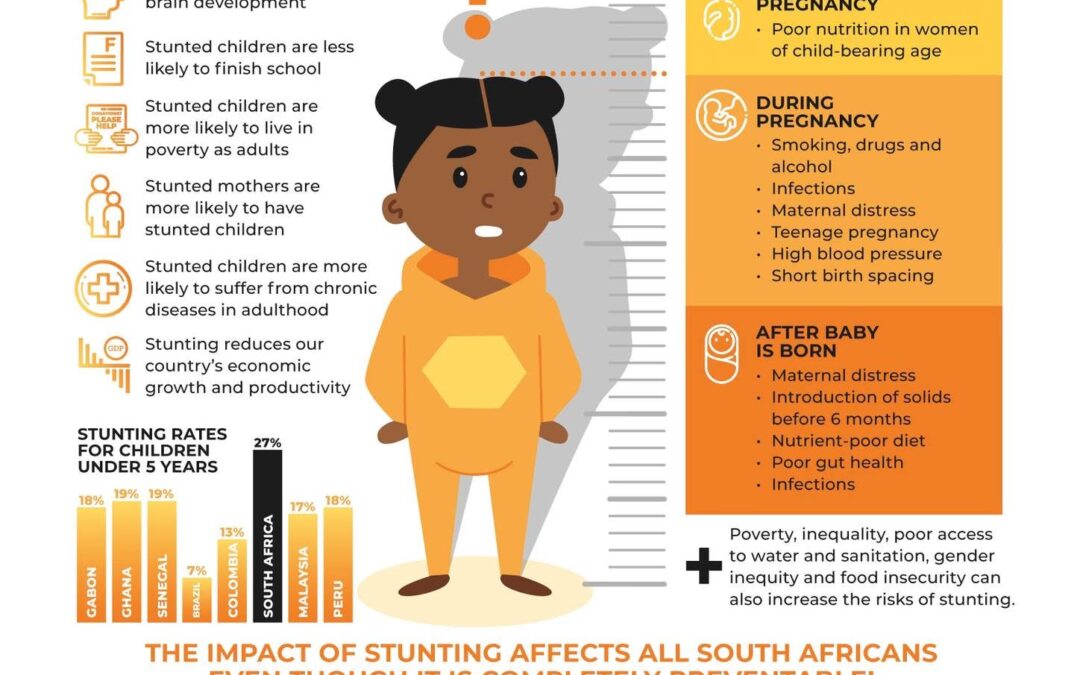
Stunting happens when a child doesn’t get the food, care and support they need during pregnancy and the first two years of life. Many people think stunting is only about a child being shorter than other children their age, but it affects much more than height. It can also shape how a child grows, learns and develops for years to come.
The good news is that stunting can often be prevented when families receive the right support during pregnancy and in the first two years of a child’s life.
How can you spot the signs?
Stunting develops slowly, so it isn’t always easy to notice. According to Isuretha Visagie, Flourish Project Coordinator, parents should look out for signs such as a child growing much more slowly than other children of the same age, not putting on weight as expected, getting sick often, having low energy, or not doing things like sitting, crawling, walking or talking when you would normally expect.
As children get older, stunting can also make it harder for them to learn and keep up at school. Regular clinic check-ups can help spot growth problems early, so if you’re worried about your child’s growth or development, it’s important to speak to a healthcare worker.

Why do the first 1,000 days matter?
The first 1,000 days, from pregnancy until a child’s second birthday, are the most important time for a child’s growth and development.
Linda Ndlovu, Programme Manager for Flourish, explains that this is when a child’s brain and body grow the fastest. Healthy food, love, play and good care during this time help build a strong foundation for a child’s future.
She also explains that stunting isn’t only caused by a lack of food. A healthy pregnancy, breastfeeding, protecting children from illness, and spending time talking, playing and caring for them all help children grow and develop well. Because the effects of stunting are much harder to reverse after the age of two, these early years are the best time to prevent it.
Through implementing partner Flourish, the Lesedi Solar Park Trust is helping mothers and caregivers in Tsantsabane and Kgatelopele access the support they need during the first 1,000 days of a child’s life.
It’s not a parenting failure, it’s a community challenge
If you’ve ever felt a quiet sense of guilt about your child’s growth, you’re not alone, and you’re not to blame.
Stunting is rarely about a parent not loving or trying hard enough. More often, it’s tied to circumstances that are much bigger than any one family: unemployment that makes it hard to afford nutritious food, limited access to healthcare or clean water, and the daily pressure of simply getting by. For some families, cycles of hardship, including alcohol dependency in the home, add another layer of difficulty that makes consistent care harder to provide, not because parents don’t care, but because they’re carrying more than any one person should have to carry alone.
These are social and economic challenges, not personal failures. And they’re exactly why Flourish exists: not to judge, but to walk alongside families and help close the gaps that poverty and hardship create.

You’re not alone, support is available
No parent should have to go through this journey alone, and no parent should have to carry shame for challenges that were never truly theirs to solve alone.
Flourish supports mothers from pregnancy until their child’s second birthday through free antenatal and postnatal group sessions. Parents and caregivers learn about healthy pregnancies, breastfeeding, feeding young children, child development and when to seek medical help, while also connecting with other parents in a safe, judgement-free environment.
“By giving families the right information and support from the very beginning, we help reduce the risk of stunting and give every child the best possible start in life,” says Isuretha.
Linda’s message to parents is simple:
“Every child deserves the opportunity to reach their full potential. Small, consistent actions during the first 1,000 days can make a lifelong difference to a child’s health, learning and future.”
South Africa has set a goal of ending child stunting by 2030. Reaching that goal will take parents, families, communities, healthcare workers, organisations and government working together so that every child has the chance to grow, learn and thrive.
This is why the Lesedi Solar Park Trust has invested in Flourish: because giving families real, practical support is one of the most powerful ways we can change the story for our children, together.
If you’re expecting a baby or raising a child under the age of two, speak to your local Flourish host in Tsantsabane or Kgatelopele to find out more about the free antenatal and postnatal support groups available in your community.
As Isuretha says, “You are not alone.”