
“Our posture in this work is to begin with the community agenda.”
— Tanya Sango, Collaboration Lead, Lesedi Solar Park Trust
Before we can work together to strengthen our communities, we first need to understand them.
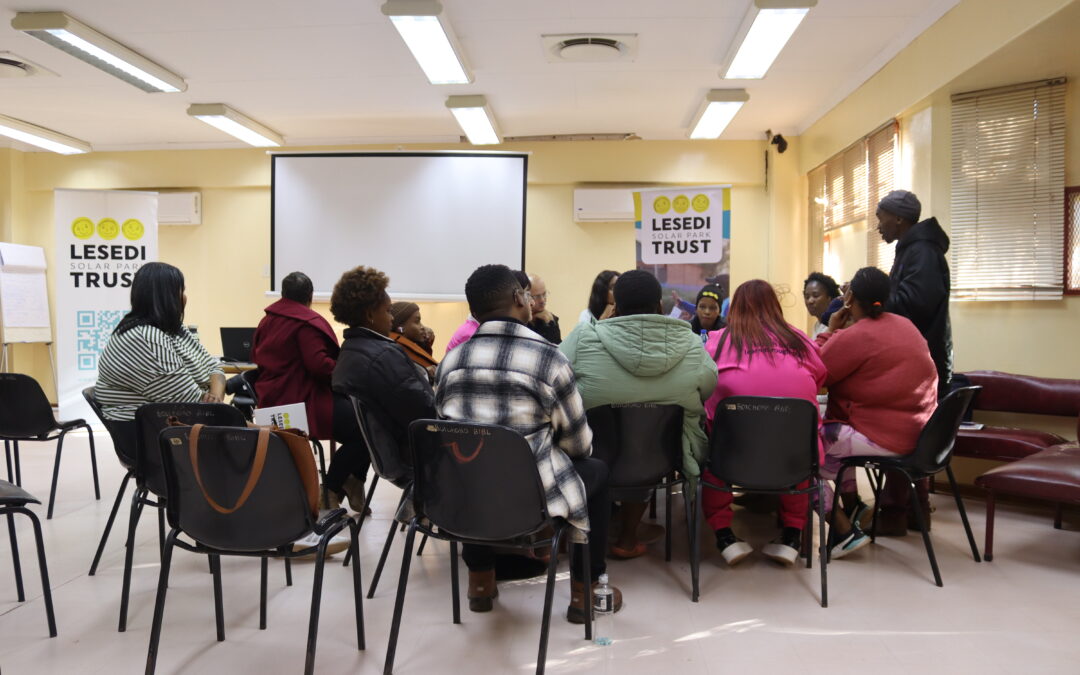
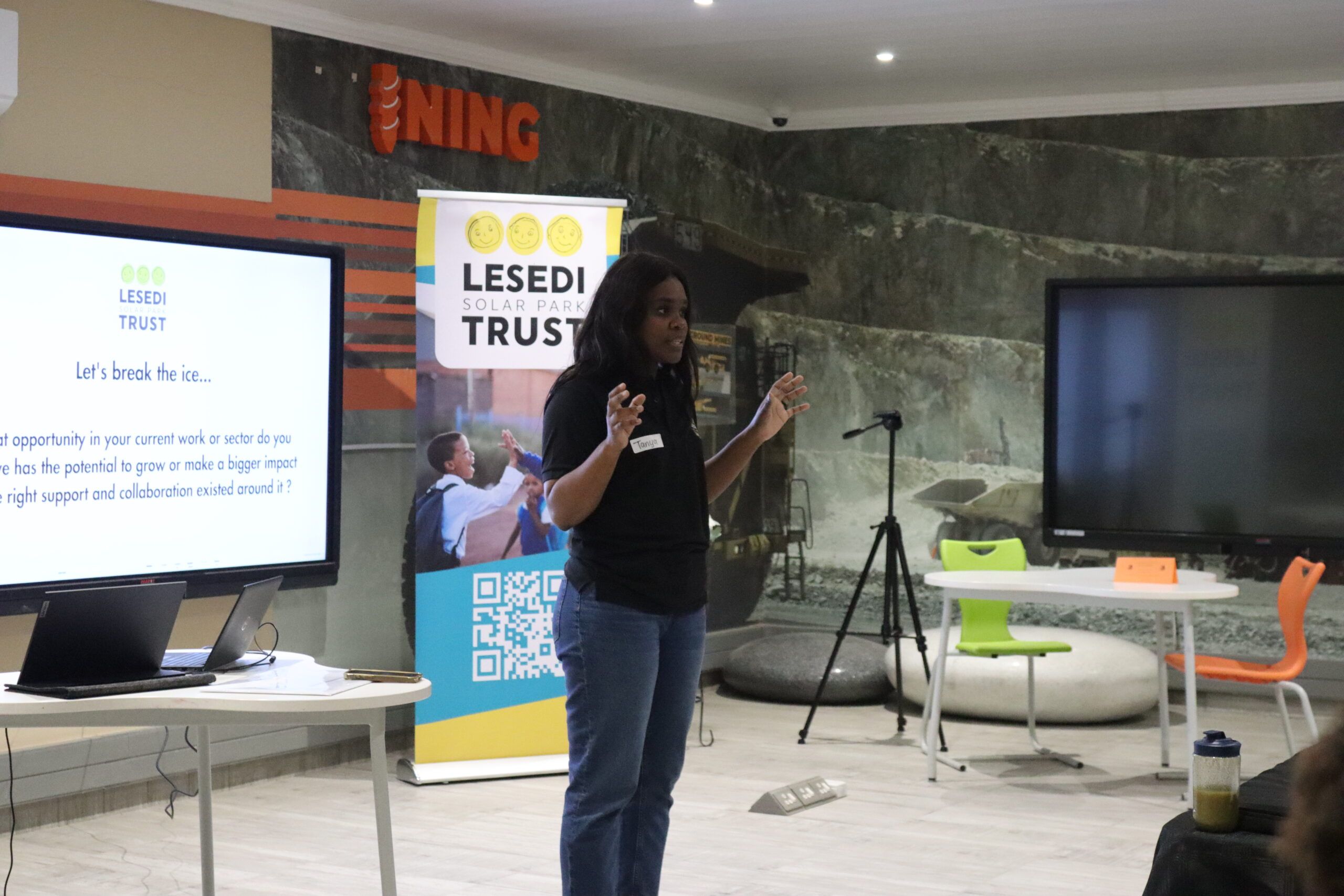
That was the thinking behind the Community Diagnostics hosted by Lesedi Solar Park Trust in Postmasburg and Danielskuil during May. Rather than arriving with predetermined solutions, the Trust created space for community members to share their experiences, reflect on what is working, speak honestly about local challenges, and begin identifying priorities together.
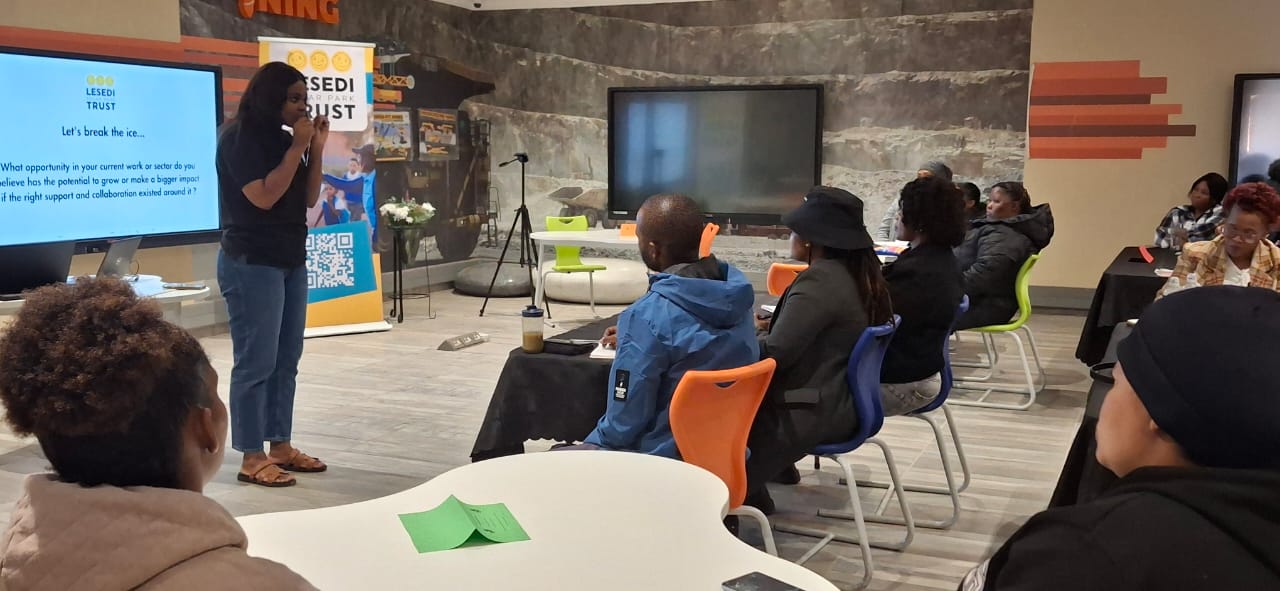
Facilitated by Lesedi Solar Park Trust’s Collaboration Lead, Tanya Sango, the Community Diagnostics form part of the Trust’s collaborative approach to community development. Rather than telling communities what their priorities should be, the process starts by listening.
“The Community Diagnostics are not simply about collecting community views. They are part of an ongoing process that supports communities to see their own system, name what matters, understand the root causes, and mobilise around solutions that are grounded in their lived reality.”
Educators, community organisations, youth representatives, early childhood practitioners, local activists and members of the Trust’s Advisory Committee all contributed to the discussions, sharing honest experiences about life in Postmasburg and Danielskuil.
Looking Beyond the Ratings
Using a simple Red, Amber and Green (RAG) rating process, participants reflected on eight areas that shape everyday life in their communities: Health and Wellbeing, Safety and Security, Early Childhood Development (ECD), Education and Schools, Youth Development and Opportunities, Municipal Services, Economic Opportunities, and Social Cohesion.
Across both Postmasburg and Danielskuil, participants rated Health and Wellbeing, Safety and Security, Youth Development and Opportunities, Municipal Services, Economic Opportunities, and Social Cohesion as Red, signalling serious concerns that they believe require urgent attention. Early Childhood Development (ECD) received an Amber rating in both communities, while Education and Schools was rated Red in Postmasburg and Amber in Danielskuil.
The colours, however, were only the starting point. What mattered most were the conversations that followed.
Community members shared their lived experiences to explain why they had given each rating. They spoke about long waiting times for ambulances, shortages of medication and the emotional strain many families are experiencing. Concerns were also raised about crime and gender-based violence, ageing infrastructure, unreliable municipal services, limited opportunities for young people, and unequal access to economic opportunities. Participants highlighted the need to strengthen early childhood development, encourage greater parental involvement in education, and rebuild trust between communities, local organisations and public institutions.
These conversations painted a richer picture than the ratings alone. They showed how many of the challenges facing Postmasburg and Danielskuil are interconnected. When municipal services fail, health and wellbeing are affected. When young people have limited opportunities, families and communities feel the impact. And when children do not receive the support they need early in life, it affects their education and future opportunities.
One participant reflected:
“The support system is not there for the child.”
Another reminded the group why early support matters:
“When you jump these people from Grade 1 to Grade 6, you lose your youth.”
Communities Are Part of the Solution
While participants spoke openly about local challenges, they also recognised the strengths already present in their communities. Teachers, community workers, volunteers, local organisations and residents continue supporting families every day despite limited resources.
Many participants called for greater investment in local people and organisations rather than relying on outside solutions.
As one participant simply put it:
“Train us and leave.”
Behind those four words was a simple but powerful message: communities don’t just want support—they want the skills, relationships and opportunities to continue driving change themselves.
What Happens Next?
The Community Diagnostics were never intended to be a once-off event.
Instead, they mark the beginning of an ongoing journey of listening, learning and working together. The conversations have laid the foundation for continued collaboration between residents, community organisations, schools, government departments, businesses and other stakeholders. Future engagements will deepen the shared understanding of local challenges, explore the root causes behind them and help shape actions that reflect the priorities identified by the community.
As Tanya explains, the goal is not to rush into new programmes, but to continue building a shared understanding of the community so that any future interventions are informed by local knowledge and lived experience.
Over the coming weeks, Lesedi Solar Park Trust will also invite more residents to join the conversation by sharing the Community Diagnostics findings through social media discussions and community polls. Even those who were not able to attend the sessions will have an opportunity to share their perspectives.
Because the best solutions are not developed for communities.
They are developed with communities.