
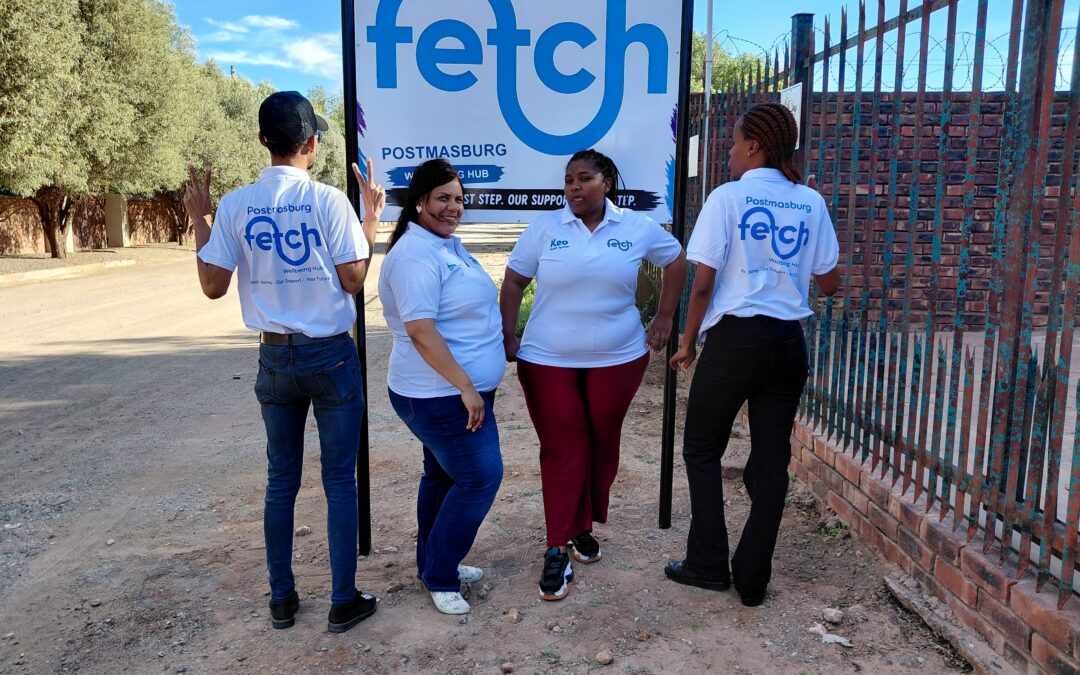
Many young people in Postmasburg know what it’s like not having things figured out. Maybe you’re looking for a job but don’t know where to start, need help with your CV, are unsure about what to study or do next, or are dealing with something personal and need someone to talk to. For many young people, finding direction after school can come with a lot of questions, especially when opportunities, information and support are not always easy to find. The FETCH Wellness Hub in Postmasburg is creating a space where young people can come as they are, talk to someone, understand their options and get support to take their next step.
FETCH is an approach supported by the DG Murray Trust (DGMT), with the FETCH Wellness Hub in Postmasburg supported through Lesedi Solar Park Trust. The approach brings together support for young people’s wellbeing and their access to learning and earning opportunities. It recognises that young people can be dealing with several things at the same time, so support needs to look beyond just one challenge. At the Hub, this means young people can access guidance, wellbeing support, digital resources and referrals to services and opportunities that can help them move forward.
But what does that actually look like when you walk through the doors?
The first point of contact is often a Youth Ignitor. Their role is to welcome young people into the Hub, listen to their story and understand what they need. They can then explain the options available, register them for the services they need and connect them to the right support. The Youth Ignitors describe themselves as a “connector”, helping young people find a starting point whether they are looking for employment opportunities, help with a CV, a course, a learnership, a bursary or a skills workshop. Where the Hub does not provide a particular service, they can also refer and connect young people to external organisations that may be able to help.
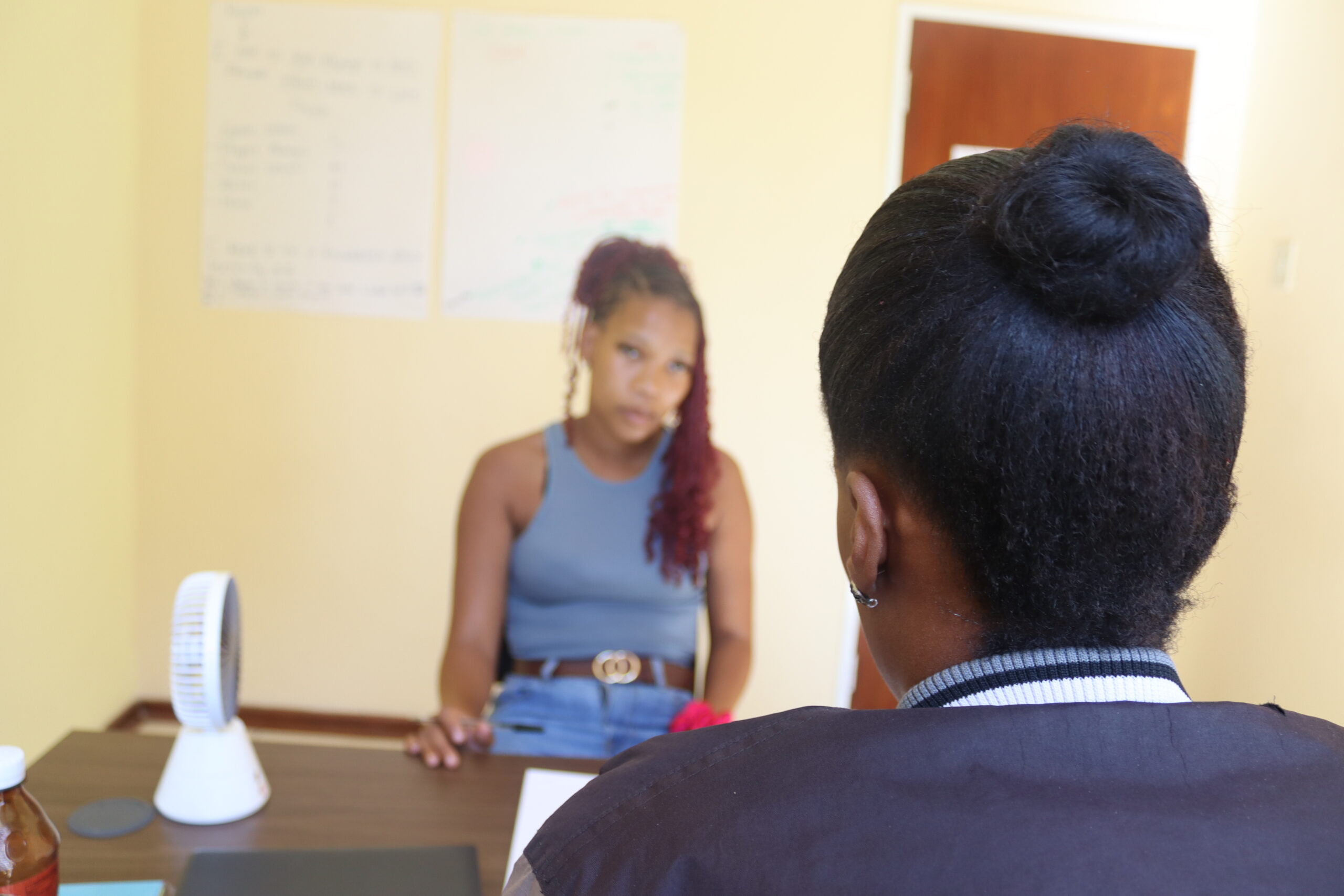
For the Youth Ignitors, making that first step feel less intimidating is an important part of the work. They say trust is built by creating a welcoming environment and showing young people that they do not need to arrive with everything worked out. “You don’t need to have a perfect plan or a flawless CV to walk through our doors. Come exactly as you are,” one Youth Ignitor says. They also see the difference that word of mouth can make when young people hear about someone who found a job, earned a certificate or obtained a licence with support from FETCH. Seeing someone else make use of the Hub can encourage others to come and find out what is available to them.
For some young people, however, the next step may not be about a job or an opportunity. You may simply feel stuck, overwhelmed, unsure of yourself, or trying to make sense of what you want from your life. This is where the Wellness Coaches come in. Once a young person indicates that they need wellbeing support, the Youth Ignitors can refer them to the coaches, who provide more specialized, person-centered support through one-on-one and group sessions.
The one-on-one support follows a structured three-session coaching plan that focuses on self-discovery, understanding where the young person is going, setting practical SMART goals (Specific, Measurable, Achievable, Relevant and Time-bound) and creating action plans. A key part of the process is the Journey Book, which one Wellness Coach describes as being “like a cellphone gallery where all of your moments are stored.” Through it, young people work through their aspirations, interests, relationships, goals and different areas of their lives, while also having the opportunity to review and adjust their goals as they continue.

For Hope Mouers, who has spent time engaging with the Wellness Coaches and Youth Ignitors at FETCH, that support has become an important part of her own journey. She initially joined because she was curious to learn more about FETCH and the services it provides, but says her one-on-one sessions with Coach Lande have since helped her build her confidence and become more self-aware. “Fetch has helped me become more confident and more outspoken,” she says. “I now feel more comfortable expressing my thoughts and engaging in conversations with greater assurance.”
One of the things Hope says she discovered about herself through the experience was something she had not recognised before: her own leadership potential. “I have come to realize that I am a leader — something I had never recognized in myself before.” For her, this has also meant gaining a clearer sense of direction. Before joining FETCH, she says she was unsure about what she wanted to pursue in the next year or two. Through the Tsantsabane Youth Collective, she now has a clearer understanding of her goals and how she wants to work towards them.
There are also Peer support group sessions, which provide another kind of support by giving young people a space to share experiences and coping mechanisms around similar social challenges. For the Wellness Coaches, some of the most meaningful moments are seeing how young people begin to view themselves differently. They describe young people leaving sessions with “a new sense of hope, renewed confidence and a glow”, while one coach says that during the self-discovery process, when different emotions and experiences come to the surface, they can begin to see “a light of hope in the darkness.”
For Hope, feeling comfortable enough to participate in her own way has also been an important part of the experience. She describes FETCH as feeling “like a second home” — a safe and supportive space where she feels respected and encouraged without being pressured to do anything she is uncomfortable with. “I am free to participate in a way that aligns with my own comfort and pace,” she says.
That is what makes the Hub more than just a place to find information. It creates a pathway where a young person can start by simply talking to someone, identify what they need, be connected to the right support, and continue receiving guidance as they work towards their goals. For Hope, that journey has meant growth, stronger confidence, and a clearer sense of who she is and where she wants to go.
For the Site Manager, Janine van den Heerver, seeing young people become comfortable enough to walk into the Hub, participate and share their ideas is one of the things that makes the work meaningful. She describes the Hub as “a safe and supportive space where young people can access guidance, wellbeing support, digital resources and opportunities to help them navigate their future.” She says that sometimes young people simply need someone to listen, help them identify what they need, and connect them to the right resources or support.
And this is perhaps the most important thing for young people in Postmasburg to know: you do not have to wait until you have a perfect CV, a clear career plan or a serious problem before you approach FETCH. If you are a young person who is not currently in employment, education, or training, the Hub is a place where you can start exploring what comes next. You can come looking for an opportunity, help with your next step, support your wellbeing, or simply because you are not sure where to begin.
The FETCH Wellness Hub is at 31 Brown Street, Postmasburg, and is open Monday to Friday, 08:30–16:30. Youth Ignitors can be reached on 084 028 1777, while the Wellness Coaches can be contacted on 074 047 4609 or 064 388 0289.
You do not have to figure everything out on your own. As one Youth Ignitor puts it, “It is completely normal to feel nervous, but you don’t have to figure everything out on your own.” Sometimes, the first step is simply walking through the door and having a conversation about where you want to go.