

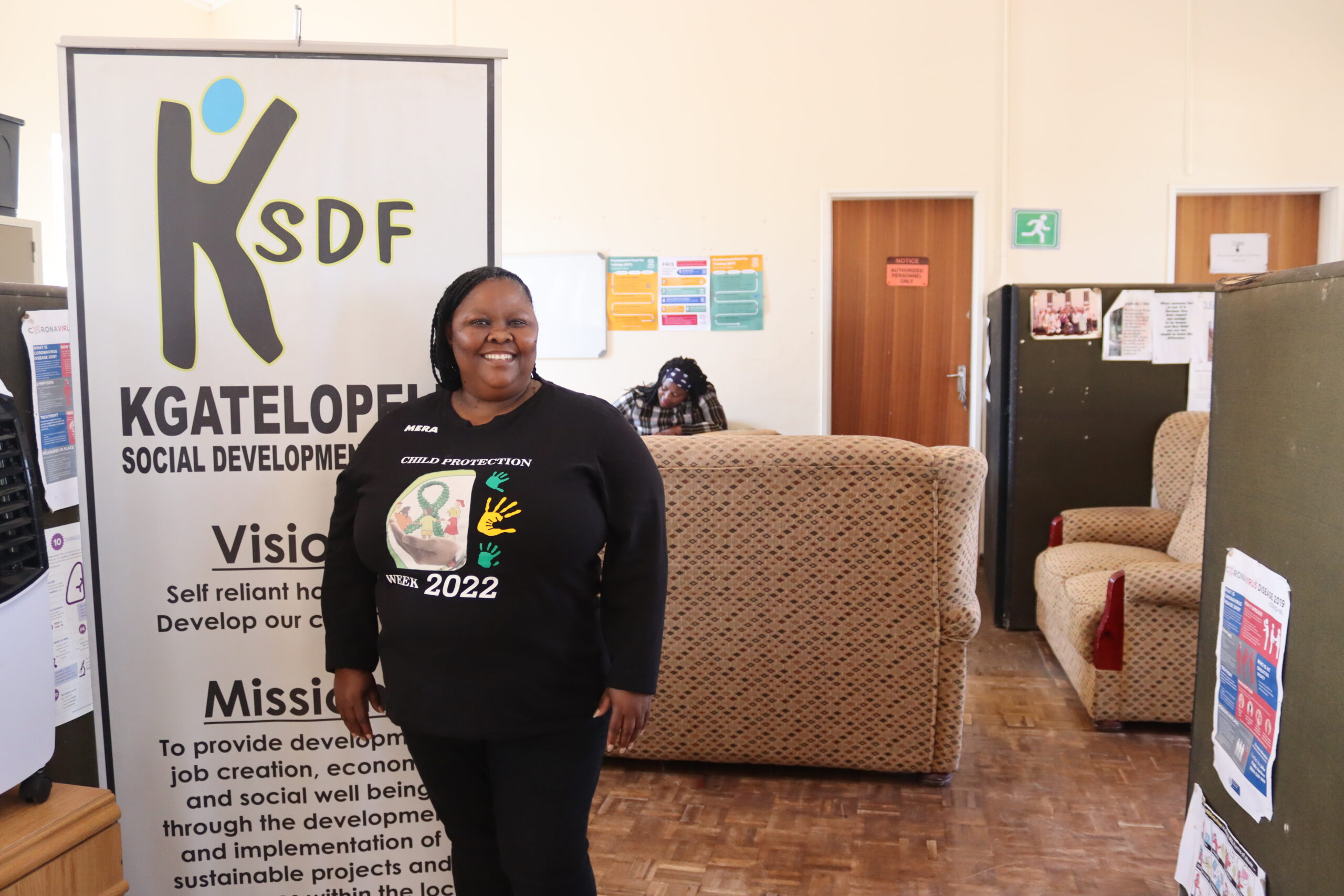
Every child deserves to feel safe, loved, and cared for. But for many children, that is not always the reality. Although Child Protection Week has come to an end, the message behind it remains important. For Mary Boer, Child and Youth Care Worker Mentor at the Kgatelopele Social Development Forum (KSDF), protecting children is not something that only happens during awareness campaigns. It is part of her daily work in Danielskuil and surrounding communities, where she supports children and families facing difficult circumstances.
For Mary, caring for children is not something that only happens during Child Protection Week. It is part of her daily work in Danielskuil and surrounding communities. Together with her colleagues at KSDF, she works with children and families who need support and guidance. KSDF was established in 2007 when communities were facing the effects of the HIV pandemic and many families needed help. Over the years, the organisation has grown and now provides a range of services, including home-based care, feeding schemes, food gardens, and programmes that support children, young people, older persons, and families in need.
Through her work, Mary sees many of the challenges affecting children today. Violence, substance abuse, and poverty continue to place young people at risk. “Many of our children are exposed to gender-based violence and substance abuse in their communities. Poverty also places children at risk and can make them vulnerable to abuse,” she says. These realities, she believes, make it more important than ever for communities to work together to protect and support children.
Mary believes communities need to return to a simple but powerful idea: every child is everyone’s responsibility. “Children are not one parent’s children. They are the children of all of us in the community,” she explains. She says neighbours, relatives, teachers, and community members can all play a role in keeping children safe. Sometimes simply checking on a child, listening to them, or offering guidance can make a meaningful difference. When communities take an active interest in the wellbeing of children, they help create safer and more supportive environments for everyone.
At KSDF, this support takes many forms. Through the Risiha Project, children have a safe place to go after school where they can learn, play, receive guidance, and spend time with caring adults. The programme also provides life skills activities and nutritional support, helping young people build confidence and make positive choices for their future.
Mary says one of the most important things adults can do is make sure children know they are not alone. “Everyone needs someone who can hold their hand,” she says. She encourages children who may be experiencing abuse, neglect, or difficult situations at home to speak to a trusted adult and ask for help. KSDF works closely with families and community members to ensure children receive support when they need it because, as Mary explains, no child should have to suffer in silence.
She also believes young people themselves have an important role to play in building safer communities. By participating in sports, youth programmes, indigenous games, and other positive activities, they can develop new skills, build confidence, and become role models for others. These opportunities not only keep young people engaged but also encourage them to contribute positively to their communities.
Mary’s message is simple: protecting children starts in our homes, schools, and communities. Whether it is reporting concerns, volunteering your time, supporting a family in need, or simply being a positive role model, every action matters. When communities stand together and take responsibility for the wellbeing of their children, young people have a better chance to grow up safe, supported, and able to thrive.